
One of the decisions I make when starting a Laravel project is how I want to build the frontend.
Laravel gives you several ways to approach this. Two options I find particularly interesting are Livewire and Inertia.js with Vue.
Both allow you to build modern applications while keeping Laravel at the centre of your stack. Both can deliver interactive user experiences. And both can be a great choice depending on what you're building.
But they approach frontend development differently.
So, how do I choose between them?
For me, it comes down to the nature of the application, the complexity of its interface, and how I want to structure the project as it grows.
Understanding the difference
Before comparing the two, it's worth understanding how they work.
Laravel Livewire lets you build dynamic interfaces using Laravel components, PHP, and Blade. Instead of writing JavaScript for every interactive element, you can handle much of the interaction through PHP components that communicate with the server.
You can build forms, filters, modals, search interfaces, and other interactive features without managing a separate JavaScript application for everything.
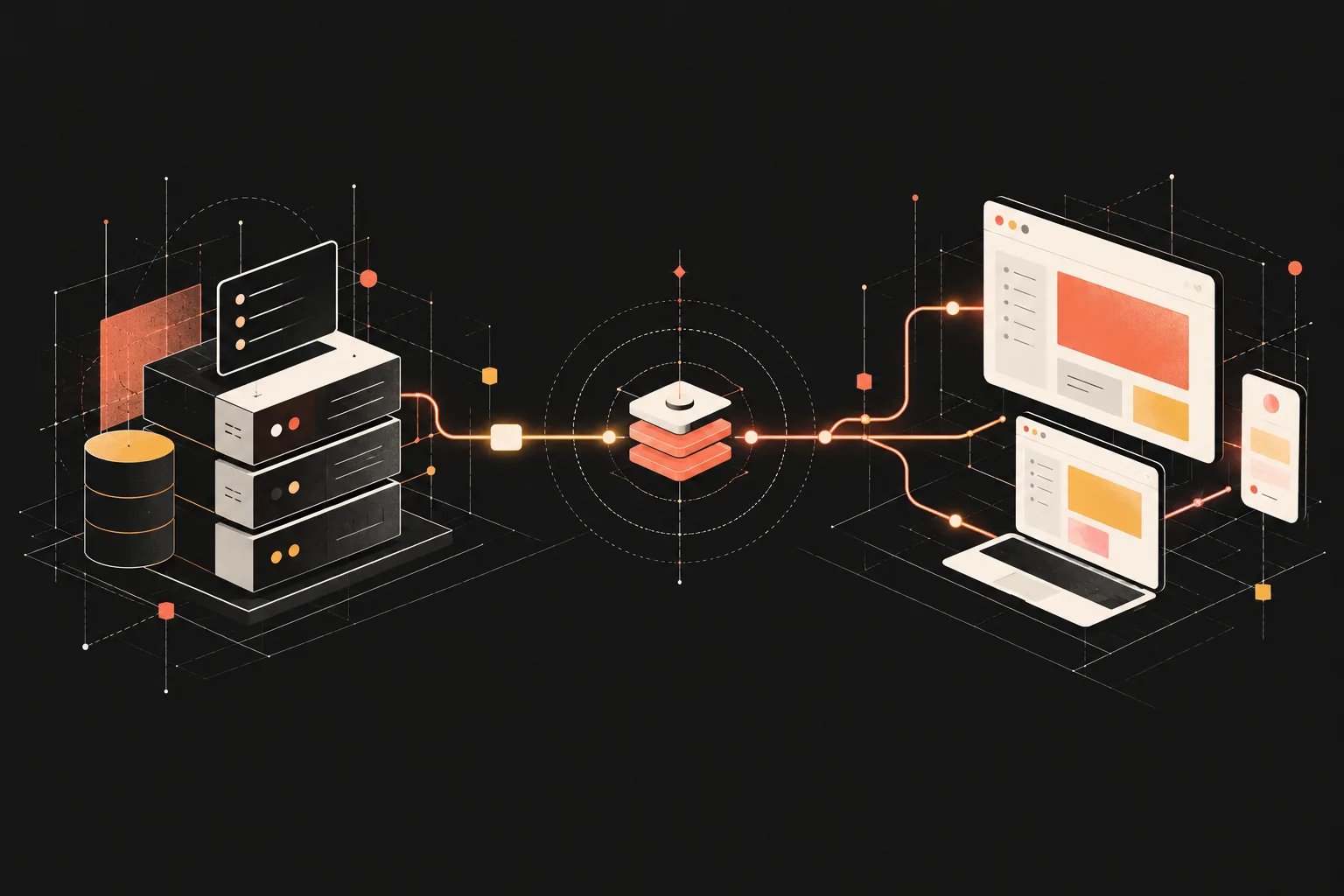
Inertia.js + Vue takes a different approach. Inertia connects your Laravel backend to a Vue frontend without requiring you to build a separate API for every page. Laravel handles routing, controllers, and server-side logic, while Vue handles the interface and its interactions.
You get a more JavaScript-oriented frontend while keeping the convenience of a Laravel monolith.
Neither approach is inherently better. They simply distribute the work differently.
When I would choose Livewire
For applications where the interface is relatively straightforward and most of the complexity sits in the business logic, Livewire is an attractive option.
Imagine building an internal management system with forms, tables, search filters, approval workflows, and administrative screens.
These interfaces need to be functional and reliable, but they may not require a heavily customised frontend architecture.
With Livewire, I can keep much of the implementation close to Laravel. Validation, authorisation, and application logic can remain within familiar PHP workflows, while Blade handles the markup.
This can make development efficient, particularly when the team is already comfortable with Laravel and PHP.
I would seriously consider Livewire for:
- Internal business tools and administrative systems.
- CRUD-heavy applications.
- Approval and workflow management.
- Data-entry interfaces and operational dashboards.
- Projects where minimising frontend complexity is a priority.
Of course, Livewire can support more sophisticated interfaces too. Choosing it doesn't mean sacrificing interactivity. The question is whether its component model fits the experience I want to build.
When I would choose Inertia + Vue
When the frontend becomes a major part of the product experience, I tend to favour Inertia with Vue.
Consider a marketplace with advanced search, dynamic filters, vendor dashboards, product listings, interactive forms, and different experiences for different types of users.
The application may still rely heavily on Laravel for its backend, but the frontend has its own complexity.
Vue gives me a component-based JavaScript environment for managing that complexity. I can organise reusable interface components, manage client-side state where necessary, and build interactions without having every interaction depend on a server round trip.
Inertia makes this particularly appealing because I can work with Vue while retaining Laravel's routing and controller conventions.
I would lean towards Inertia + Vue for:
- Marketplaces and customer-facing platforms.
- Applications with rich interactive interfaces.
- Products with complex filtering and search experiences.
- Dashboards with substantial client-side interaction.
- Projects where the frontend is likely to evolve into a significant part of the application.
This approach does introduce more frontend concepts to manage. Components, props, state, JavaScript dependencies, and frontend testing all become part of the development process.
That extra structure is worthwhile when the application benefits from it, but not every project needs it.
The trade-offs I consider
Here's how I think about the decision in practical terms.
| Consideration | Livewire | Inertia + Vue |
|---|---|---|
| Primary development language for UI logic | PHP | JavaScript |
| UI rendering approach | Blade with server-driven updates | Vue components |
| Interactive behaviour | Often involves server requests | Can run locally in the browser |
| Frontend complexity | Usually lower to moderate | Moderate to high, depending on the app |
| Laravel integration | Direct and component-oriented | Laravel controllers and Inertia page props |
| Best fit | Server-driven interfaces | Rich, component-driven interfaces |
These are general tendencies, not strict limitations. Livewire supports sophisticated interfaces, and Vue applications still rely on the server for data and business operations.
The decision is less about which technology has more features and more about which development model suits the project.
Performance is not just about the framework
It's tempting to choose a stack based on assumptions about speed.
Livewire may require server requests for many interactions, while Vue can handle some interactions entirely in the browser. That distinction matters, particularly for interfaces where users make frequent changes.
However, performance also depends on database queries, network latency, payload sizes, caching, rendering work, and application architecture.
A poorly designed Vue application can be slow. A well-designed Livewire application can be highly responsive.
I would evaluate the actual interaction patterns before making performance the deciding factor.
What about maintainability?
This is where I think the size and direction of the project matter.
With Livewire, keeping much of the interface logic in PHP can simplify development and reduce the amount of frontend tooling a project needs.
With Inertia + Vue, the separation between backend responsibilities and frontend components can make a complex interface easier to organise. However, it also means maintaining code across PHP and JavaScript.
Neither approach automatically produces maintainable software.
Clear component boundaries, reusable code, good naming, testing, and sensible architecture matter more than choosing a framework because it is popular.
The important question is which structure will make the application easier to understand and change six months or two years from now.
My decision-making process
When choosing between Livewire and Inertia + Vue, I start with a few questions.
1. What kind of experience am I building?
A conventional administrative interface has different needs from a marketplace or an interactive customer-facing platform.
2. Where does the complexity live?
If most complexity is in business workflows and server-side operations, Livewire may be a natural fit. If a significant amount lives in the browser and the interface itself, Vue becomes more attractive.
3. How interactive does the interface need to be?
Frequent client-side state changes, rich interactions, and complex reusable UI components may favour Vue. Simpler server-driven interactions may be easier with Livewire.
4. Who will maintain the application?
The team's existing skills, preferred language, testing practices, and long-term maintenance plans should influence the decision.
5. What is the simplest architecture that meets the requirements?
I don't want to introduce complexity simply because a technology gives me more control. I want enough structure to solve the current problem without making future changes unnecessarily difficult.
So, which one would I choose?
I don't think there is one answer that works for every Laravel project.
For a straightforward internal system with lots of forms and administrative workflows, I'd give Livewire serious consideration.
For a marketplace, a product with a rich frontend, or an application where reusable Vue components and client-side interaction are central to the experience, I'd lean towards Inertia + Vue.
The goal isn't to use the most sophisticated stack available. It's to choose a stack that supports the product without creating unnecessary complexity.
For me, good technical decision-making is about understanding the trade-offs before committing to an architecture.
The best choice isn't necessarily the framework that can do the most. It's the one that makes the application you're building easiest to deliver, maintain, and evolve.